Top, Heart and Base Notes, Explained by a Paris Workshop Facilitator
A Paris workshop facilitator explains top, heart and base notes: how each layer behaves on skin, how blends get balanced, and how to buy perfume smarter.
 By Antoine Lefèvre, Paris perfume workshop facilitator

The strip comes off the bench, goes under a nose, and a face lights up. "This one." I have watched that exact moment on repeat since 2022, across more than a thousand workshop participants by my own count, and I can tell you it is usually the moment right before the mistake. Not a disaster. Nothing a session cannot recover from. But the material that wins the first second on a blotter is almost never the one that should anchor a perfume, and understanding why means understanding the pyramid.
What are top, heart and base notes?
A perfume is built in three layers. Top notes are what you smell first, and they fade first. Heart notes take over once the opening lifts and carry the character of the fragrance. Base notes are the deepest materials, and they last longest on your skin. Perfumers sketch the three as a pyramid, fleeting at the peak and lasting at the wide bottom.
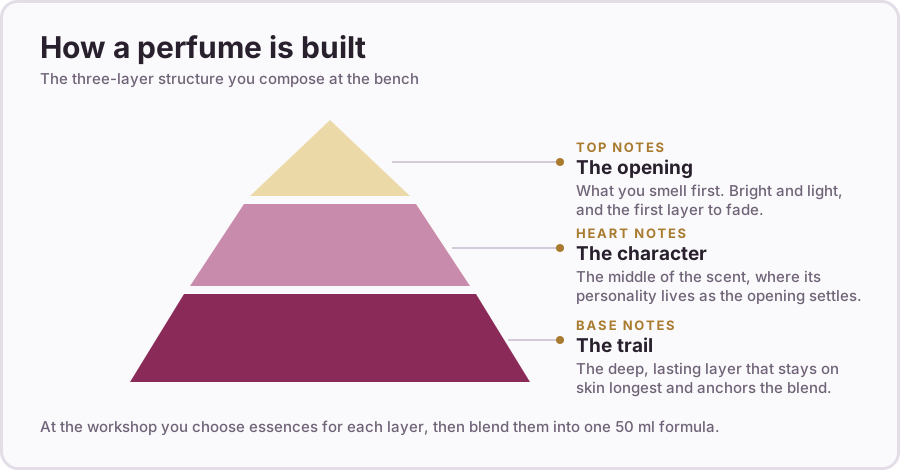
The pyramid is a map, not a law. Real materials refuse to queue politely; some so-called heart materials hang around into the base, some bases whisper from the very first spray. I still draw it at every session, because it gives people a working picture in ten seconds. Just hold it loosely. A finished perfume is closer to a chord than a melody, three registers sounding together with the balance shifting over time, and the pyramid simply names the registers.
What the drawing gets right is the direction of travel. Light, volatile materials leave first. Heavy ones stay. Everything about choosing and blending flows from that single physical fact.
How does each layer behave on your skin?
In sequence. The top opens the instant scent touches skin, then fades. The heart carries the middle of the story and is what people around you register as your perfume. The base is what is still on your scarf the next morning. A fragrance keeps developing on skin over hours, so the first sniff never tells you the whole truth.

The families give you a rough sense of who lives on which floor. Fresh and citrus materials tend to sit in the top, where their brightness makes the introduction. Florals often carry the heart. Woods and the amber family usually hold down the base, along with the other deep, slow materials. Tendencies, not rules, but useful ones.
Skin complicates all of it, wonderfully. A blotter shows you the scent as the perfumer built it, cold and honest. Skin warms it, feeds it, bends it toward you, which is why the same blend reads differently on two people at the same bench. At my sessions I make everyone test both ways: strip for judgment, skin for truth.
Why does everyone fall for the wrong note at first?
Because the blotter rewards the loudest opening. In the first second of a sniff, bright top materials shout while deep base materials barely clear their throat, so people audition a pile of strips and shortlist only sparkle. A blend built that way smells wonderful for minutes, then thins out to nothing.
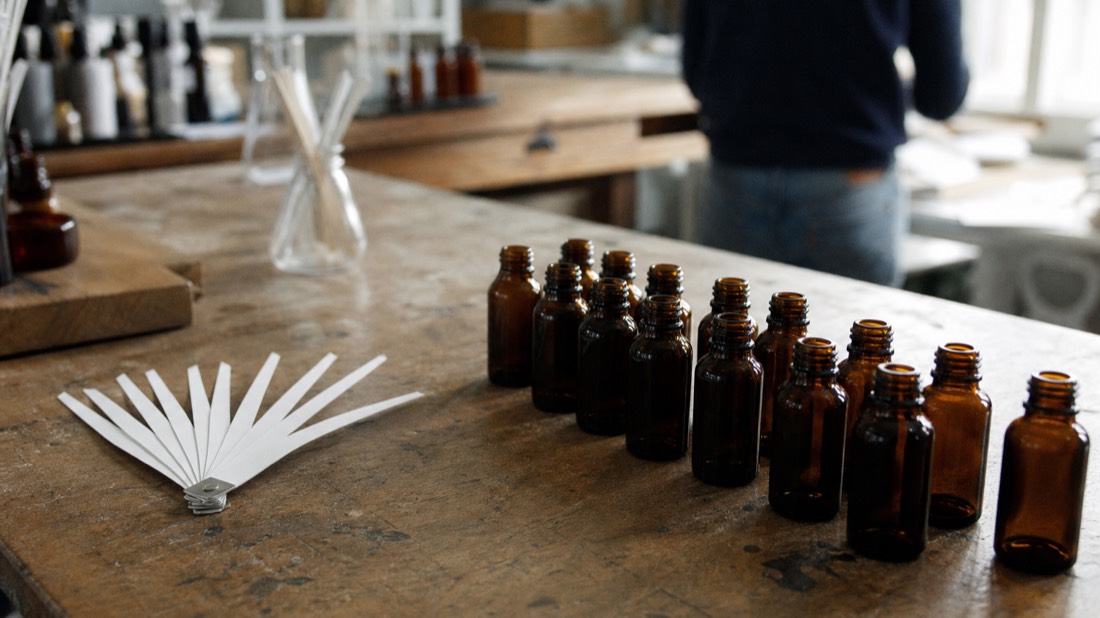
This is the single most common pattern I see at the bench, and I have stopped being surprised by it. The fix is patience, applied twice. First: when a strip strikes you as dull or heavy or strange, do not discard it, set it aside and return to it after the opening has burned off. The strips people dismiss in the first round have a habit of becoming the favorite an hour later, once the material has had time to say its actual name.
Second: smell the base materials last, and slowly. They are marathon runners being judged at the starting line. Give a deep wood or an amber the time it needs on the strip and you start to hear what it will do for a blend, which is mostly this: hold everything else up.
How do the three layers get balanced in a blend?
Character first. Decide what the perfume should be about, choose heart materials that say it, then pick a base that gives it a floor and a top that makes a good introduction. The fragrance families are your vocabulary for that decision: floral, woody, amber, fresh and citrus, chypre, fougère.

I will not hand you magic percentages, because there are none worth printing. Proportions depend entirely on the materials in front of you; a quiet base needs more room than a loud one, and one drop of certain materials does the work of ten of another. What transfers from bench to bench is the order of decisions. Heart first, because that is the memory you are building. Base second, chosen to support that heart rather than fight it. Top last, as the handshake.
Then you test, and this is where the earlier lesson pays off. Dip a strip, wait, smell again, adjust in small moves. The beginner's instinct when a blend disappoints is to fix the opening, since that is what greets the nose. Very often the real problem is the floor. And restraint, always: fewer materials, chosen for a reason, speak more clearly than a crowd.
What changes when you buy perfume with this knowledge?
You stop buying the opening. Spray on skin, not just paper, then leave the shop and let the drydown make the decision, because the base is what you will actually live in for hours after the top has made its pitch and gone.
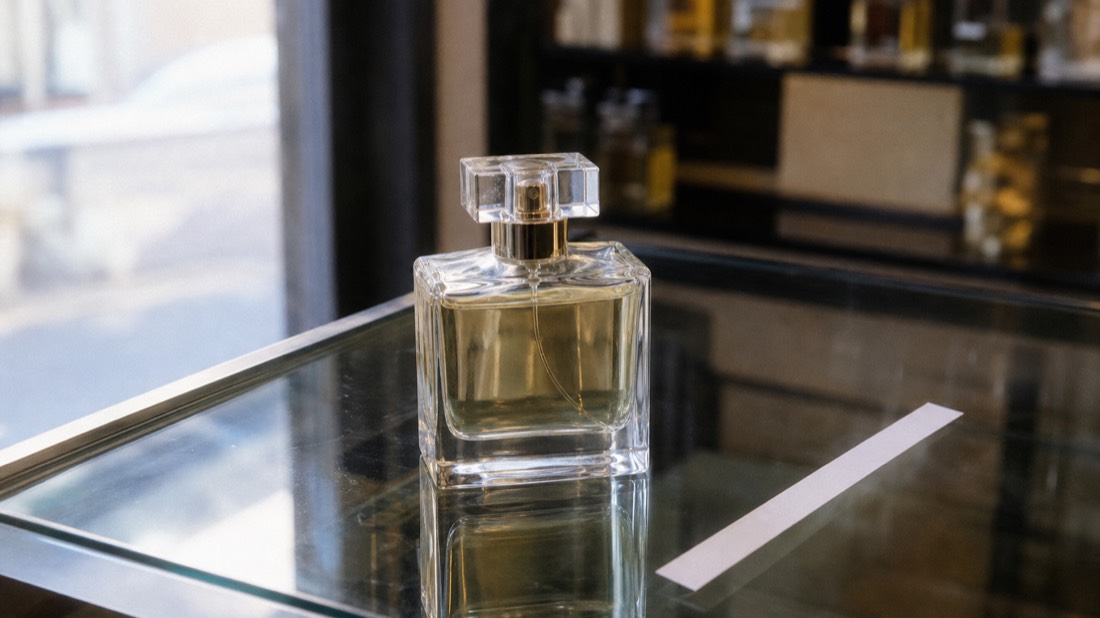
The ritual I recommend is unglamorous and it works. Spray one candidate on skin, take the strip with you, and walk. Come back to your own wrist over the next hours the way you would revisit a strip at the bench. If you still like what is there at the end of the day, that is a perfume you can live with, not just one that flirted well. The layers also give you words for the counter: asking for something with a woody base and a fresh opening gets you further than "something nice", and any good shop will run with it.
And if you would rather learn all this with your hands than from an article, that is exactly what a workshop bench is for. The session this site covers in depth is the small-group workshop near Trocadéro, about 1 hour 30 minutes with a maximum of 8 people, all materials and a 50 ml bottle included, plus a formula you keep for reorders. I do not teach it, its listing names the perfumer Marina Jung, but the shape is right: it holds 4.7 across 293 Viator reviews. Details are on the workshop page, and if you are still choosing between ateliers, start with the honest comparison of the Paris workshops.
The pyramid takes ten seconds to draw and years to exhaust. Learn the three layers and every perfume you meet from now on, in a shop or on a friend, becomes something you can read.