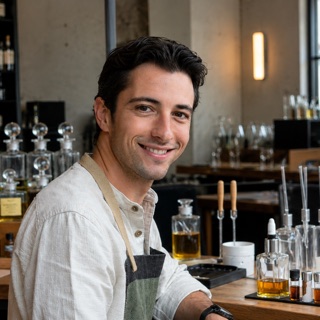
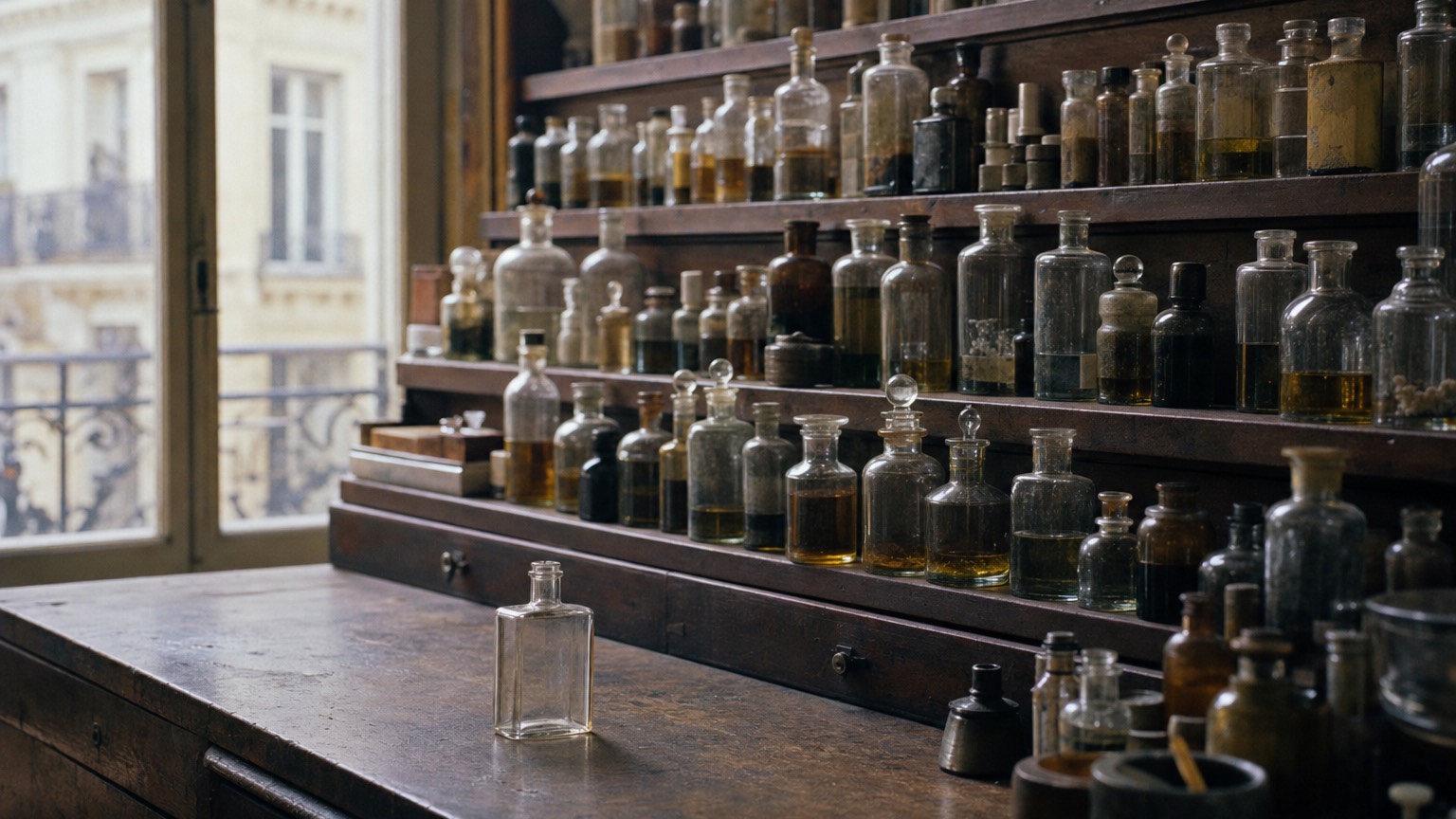
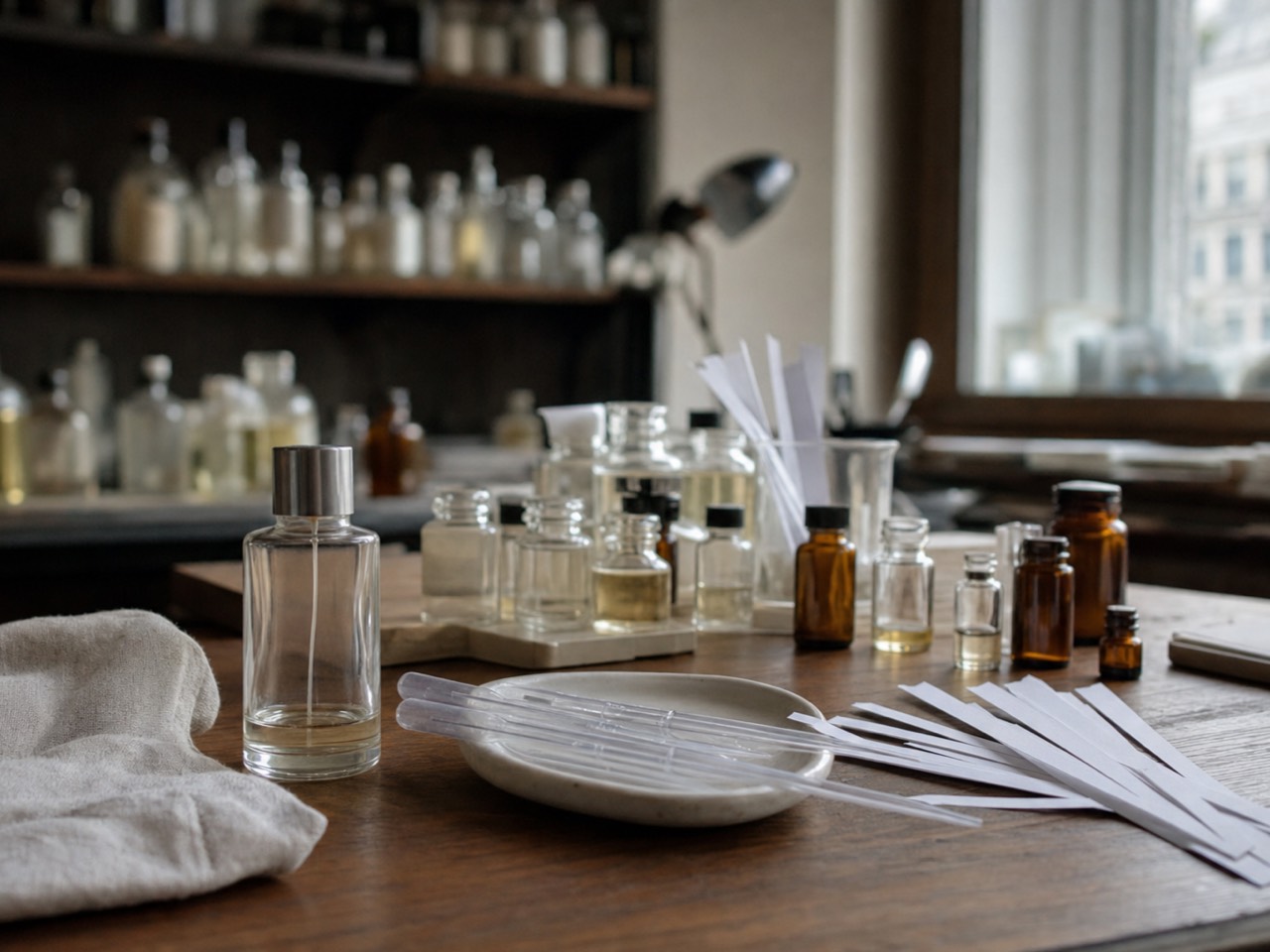
The question shows up on r/fragrance every season. Here is the answer from someone who works the other side of the bench.
Written with Antoine Lefèvre, Paris perfume workshop facilitator
Short answer
Yes, for most travelers who care about scent: for the 65 to 95 euros the brand houses publish, or the live-priced small-group session near Trocadéro, you spend roughly 90 minutes composing with a perfumer and leave with a 30 to 100 ml bottle of a fragrance that exists nowhere else. It is not worth it if you only want a famous-brand bottle to take home, if you have half an hour to spare, or if guided group activities make you itch.
Somebody on r/fragrance asks a version of this every few months: are any of these perfume workshops in Paris actually worth doing? I have led hands-on perfume workshops in this city since 2022, more than a thousand participants by my own count, and I can tell you the honest answer is not a clean yes. It depends on what you think you are buying. Most people who sit down at a scent organ expecting a fun hour get more than they expected. A minority walk in wanting something a workshop cannot give, and they leave lukewarm. This guide is for sorting out which one you are before you pay.
Is a perfume workshop in Paris worth it?
Yes, for most travelers: the published brand-house sessions run 65 to 95 euros for 45 minutes to 2 hours of guided composition, and every one of them sends you home with a real bottle, from 30 ml at Molinard to 100 ml at Galimard and Fragonard. You are paying roughly the price of one good dinner for a skill session plus a physical object, which is a better ratio than most Paris activities can claim.
The reason I answer yes without much hesitation is that the value does not rest on the bottle alone. A workshop is one of the few Paris experiences where you make something instead of looking at something. The Louvre is magnificent and passive. Ninety minutes at a bench is active: your nose, your choices, your mistakes. Participants tell me afterward that they smell perfume differently in shops for years, which is not a claim any museum ticket can make.
The field is easy to survey because the houses publish their prices. Molinard lists a 45-minute session with a 30 ml bottle from 65 euros. Galimard lists 89 euros for a 100 ml Eau de Parfum. Fragonard's apprentice workshop at its perfume museum lists 95 euros for a 100 ml eau de cologne. The small-group session near Trocadéro that this site features shows its live price on the operator's Viator listing, where it holds 4.7 across 293 reviews with 94% of travelers recommending it. Those are the stakes. Now the details.
What do you pay, and what do you physically take home?
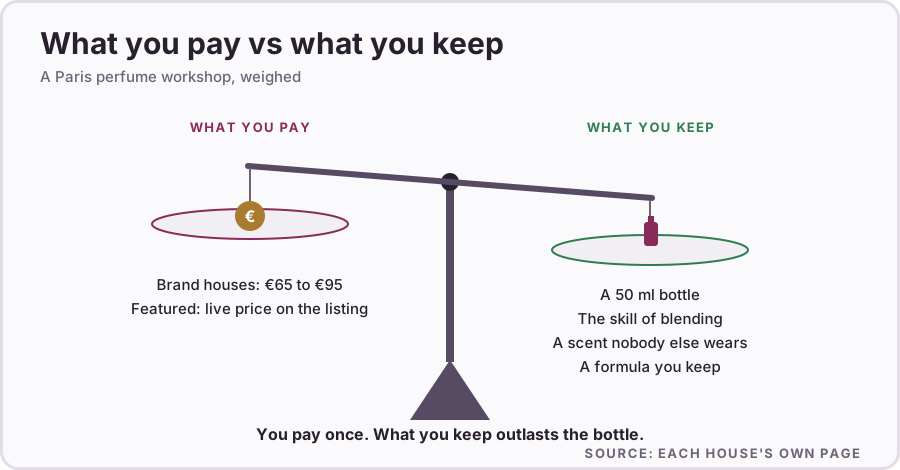
Between 65 and 95 euros at the brand houses buys you between 30 and 100 ml of finished fragrance, plus the session itself. On the houses' own published numbers, Galimard's 89 euros for 100 ml is the most perfume per euro, while the featured Trocadéro session includes a 50 ml bottle, its packaging, all raw materials, and a formula you keep for reorders.
Run the arithmetic yourself, since every figure here is published. Molinard's from-65-euros session works out to about 2.17 euros per millilitre for its 30 ml bottle. Galimard's 89 euros over 100 ml is 0.89 per millilitre. Fragonard's 95 euros over 100 ml comes to 0.95, though note you are composing an eau de cologne there, a lighter concentration than a parfum-strength blend.
That math is honest but incomplete, and I say this as someone who mixes these materials for a living. The bottle is the souvenir. The session is the product. A 45-minute express workshop and a two-hour composition class can bottle the same volume and still be entirely different purchases. The sleeper feature to price in is the formula: when you leave with your blend written down, as you do at the featured Trocadéro workshop, your 50 ml is the first bottle of a scent you can reorder from home, not the last. None of the published brand-house prices above include that.
What you pay, 65 to 95 euros at the brand houses, weighed against what you keep from a perfume workshop.
What do the 90 minutes actually teach you?
A real session walks you through the fragrance families, the architecture of top, heart and base notes, and the discipline of testing on paper before committing to the blend. You leave knowing how a perfume is built, which changes how you buy fragrance for the rest of your life.
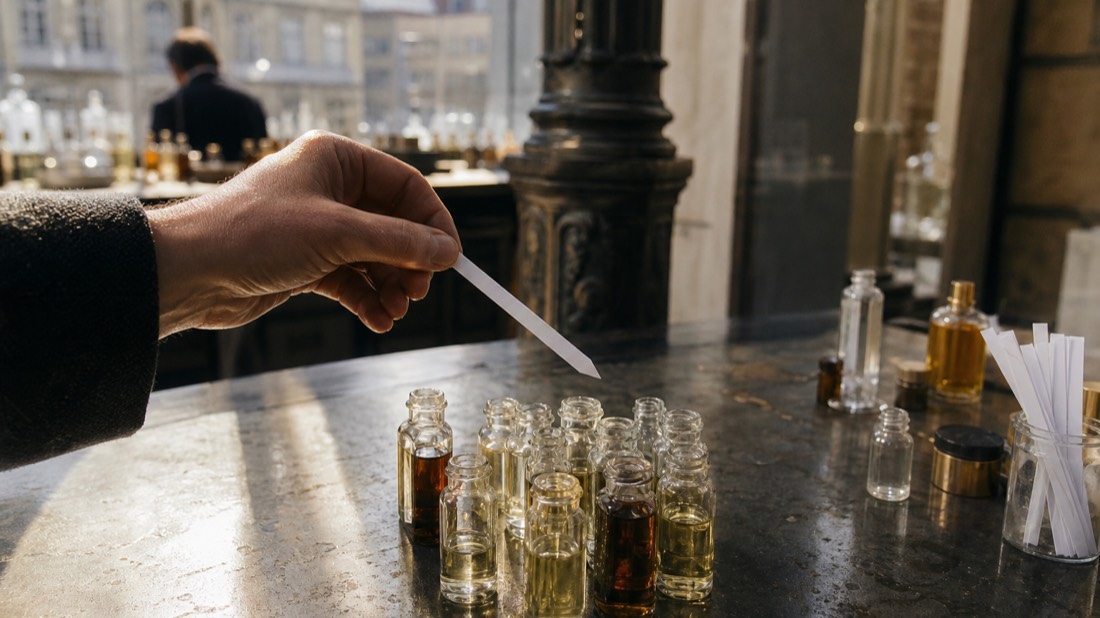
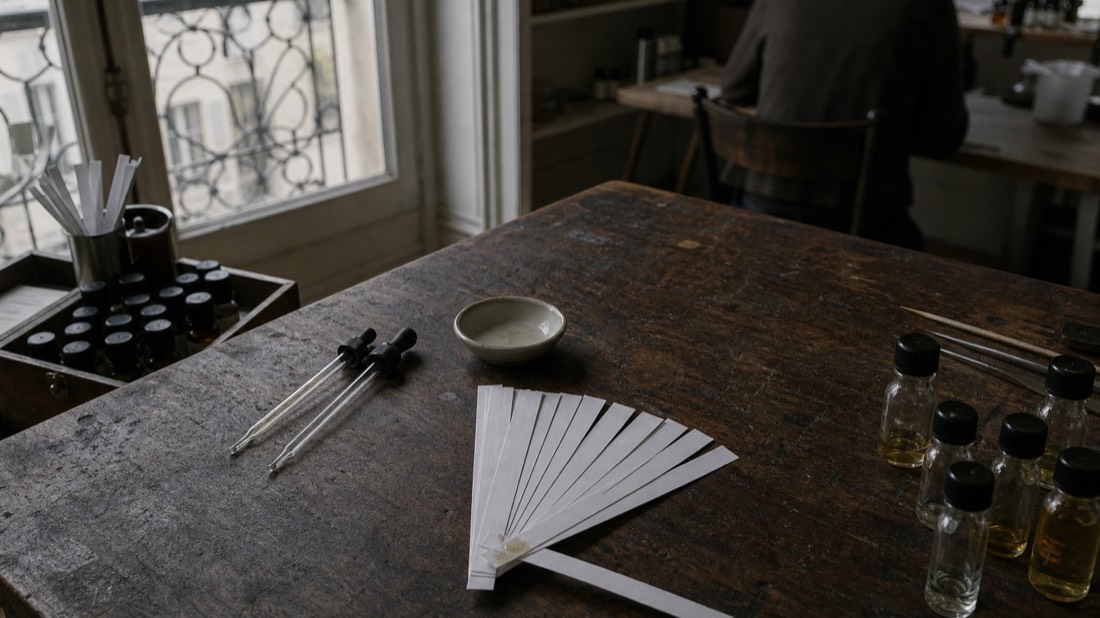
Here is roughly how the craft unfolds at the bench, in my own sessions and in every serious workshop I know of in this city. You start by smelling across families: citrus, floral, woody, amber, and their in-betweens. Most people discover within ten minutes that what they thought they liked and what their nose actually reaches for are two different things. That discovery alone is worth a chunk of the fee.
Then comes structure. A fragrance is not a soup, it is a sequence. Top notes greet you and vanish. Heart notes carry the middle hour. Base notes are what your scarf smells like tomorrow. Learning to build in that order, testing each stage on a paper strip and waiting for it to develop before judging, is the actual skill being transferred. Ninety minutes is enough time to do this properly. Forty-five minutes forces shortcuts, which is why I steer people who care about the process toward the longer formats. The featured session runs about an hour and a half with a group capped at 8, which is the scale where a perfumer can respond to your nose instead of lecturing at the room.
When is a perfume workshop in Paris not worth it?
Skip it in three cases: you really just want a famous-brand bottle, in which case 65 to 95 euros buys excellent finished perfume in any Paris department store; you have only 30 minutes, because even the shortest published session runs 45; or you genuinely dislike guided group formats, because every workshop on the market is one.
I would rather lose a booking than send the wrong person to a bench. So, honestly.
If the outcome you want is a bottle of a fragrance you already love, a workshop is the wrong purchase. Your blend will be yours, which is the entire point, but it will not be the famous thing on your dresser at home. Buy the famous thing. In Paris it may even cost less than at home, which is a separate question I cover in is it cheaper to buy perfume in Paris.
If your schedule gives you a spare half hour, no format fits. Molinard's 45 minutes is the shortest published session in the field, and squeezing it risks the worst version of the experience: rushing decisions your nose has not made yet.
And if guided groups drain you, believe yourself. Even the small formats are led experiences with a shared rhythm. The featured session caps at 8 people, which is as intimate as bookable workshops get, but 8 is not zero. A solitary alternative is browsing the free perfume museum at Fragonard and the city's perfumeries at your own pace.
Which travelers should book one, and which should not?
Book it if you are a couple wanting a shared thing to make, a fragrance-curious traveler, or a group of friends who like doing over watching. Think twice if you are brand-loyal, time-poor, or group-averse.
You are
Verdict
A couple looking for one memorable shared activity
Worth it. Two benches, two scents, one story. The Trocadéro session suits this best in my view: small group, English offered, free cancellation to 24 hours.
Curious about perfume but a total beginner
Worth it. Beginners get the most out of the families-and-notes teaching, not the least.
A fragrance hobbyist who already blends at home
Worth it with the right pick: choose a longer session over an express one. Compare formats on the comparison page.
Traveling with kids under 12
Worth it via Candora's family sessions, built for ages 6 to 11. Most adult workshops are not.
After a famous-brand bottle, on a tight schedule, or allergic to groups
Not worth it. Buy retail, enjoy the free Fragonard museum, keep your 90 minutes.
My conflict of interest, stated plainly: I lead workshops in this city myself, so I believe in the format, and this site earns a commission if you book the featured session through its Viator link. That is exactly why every price above is a published figure you can check on the houses' own pages, and why the ranking of alternatives lives openly in the best perfume workshop in Paris.
Viator Badge of Excellence
Best for first-timers, couples and anyone who loves scent
Paris Create your Own Perfume Workshop with a Perfumer
4.7across 293 Viator reviews, 94% recommend
Blend and bottle your own 50 ml perfume with a perfumer's guidance, near Trocadéro
Small group of 8 at most, about 1 hour 30 minutes, offered in English
All raw materials included, and you can reorder your scent later if you keep the formula
Live price on the listing shown for your date and currency at booking
Free cancellation up to 24 hours before. Ratings are the operator's current Viator figures; check the listing for today's price.
What are you paying for, line by line?
Strip the question to its parts and the value gets clearer. At the brand houses you pay 65 to 95 euros for a guided session of 45 minutes to two hours, plus a finished bottle of 30 to 100 ml, plus, at the featured session, the formula you keep. On published price-per-millilitre alone Galimard leads at 0.89 euros; on everything else the picture is less tidy.
The temptation is to rank on the bottle, because that is the number you can divide. Molinard's 30 ml from 65 euros works out near 2.17 euros a millilitre, Galimard's 100 ml for 89 euros lands at 0.89, and Fragonard's 100 ml for 95 euros comes to 0.95, though that last one is an eau de cologne rather than a parfum-strength blend. So on liquid volume, the cologne and the big Eau de Parfum win.
That is only half of what your money buys, and the smaller half in my view. You are also paying for time at the organ and for what you walk out knowing. A rushed 45 minutes and an unhurried two hours can bottle the same volume and still be different purchases. The featured Trocadéro session is the only one on this list where the price also includes a written formula, which turns your 50 ml into the first bottle of a scent you can reorder rather than the last.
Brand-house figures come from each house's own pages and can change; per-ml numbers are simple division on those published prices.
How do the 90 minutes actually break down?
A full session is a sequence, not a blur. Roughly, you spend the opening stretch smelling across families, the long middle building top, heart and base notes and testing on paper, and the last part adjusting, bottling and labeling. At about an hour and a half, the featured session gives each stage real room; a 45-minute format compresses the middle.
People picture a workshop as an hour of mixing, then a bottle. The mixing is the short part. Most of the value sits in the smelling and the waiting, because a blend has to develop on the strip before you can judge it honestly. That is why length matters so much to whether the fee feels worth it: the minutes you cannot rush are the ones where the learning happens.
Here is the shape of it, in proportion rather than exact minutes, since every facilitator paces differently.
Stage
What happens
Why it takes the time it does
Opening
Smell across the fragrance families, find what your nose likes
Most people's taste surprises them; this cannot be hurried
The long middle
Choose and dose top, heart and base notes, test on strips
Each stage has to dry before you judge it
Refining
Adjust the balance, correct a note that took over
The gap between good and yours lives here
Closing
Bottle, label, and record the formula where offered
Quick, but the formula is what makes it reorderable
Is a first workshop worth it differently from a second visit?
Your first workshop pays off as an education: you learn the families, the top-heart-base structure, and what your nose actually reaches for. A second visit pays off as refinement. You already speak the language, and if you kept your formula from round one, you can iterate on a real scent instead of starting from a blank strip.
I get asked whether a workshop is a one-time novelty or something you would do twice. Both, and for different reasons. The first time, the surprise is how differently families behave on skin versus paper, and how far your real taste sits from what you assumed. Almost nobody predicts their own result.
The second time, the value shifts toward control. You are no longer learning what a chypre is; you are deciding whether yours needs more moss. This is where keeping a formula earns its place: it lets the featured session double as the starting point for a scent you keep tuning, which is a better repeat purchase than beginning again from zero.
First workshop
Second visit
What you are really buying
Learning how a perfume is built
Refining a scent you already understand
Best format
Any guided session; longer beats express
A bench where you keep the formula
Where the featured session fits
Strong first-timer pick: English, small group
The reorderable formula makes round two easy
What surprises people
How different families smell on skin
How much their taste shifted since round one
What should you bring, and what do I tell people to skip?
Bring a clean nose and little else: skip your own perfume that morning, go easy on strong coffee or a cigarette right before, and wear something you would not mind catching a stray drop. Everything else, the essences, strips, pipettes and the bottle, is supplied. What I tell people to skip is the plan to clone a scent they already own.
At the featured session all raw materials, the 50 ml bottle and its packaging are included, so you carry nothing in and one bottle out. The single thing you cannot outsource is your nose's clarity. Wearing your signature fragrance to a workshop is like tasting wine straight after toothpaste; it muddies every strip you smell for the first half hour.
The habit I most often talk people out of is arriving determined to recreate a bottle they love. Your blend will be yours, which is the whole point, and it will not be that famous thing. If you want the famous thing, buy it, sometimes cheaper in Paris, and spend the workshop making something only you own instead. That reframe is what turns a lukewarm session into a memorable one.
Bring or do
Skip
A clean, unscented start to the day
Wearing your own perfume that morning
An open mind about which family you like
A fixed plan to clone a scent you own
Note-taking, if you want to remember your choices
Heavy coffee or a cigarette right before
Nothing else; materials are provided
Worrying about supplies or equipment
Can you get the bottle home, and can you claim the tax back?
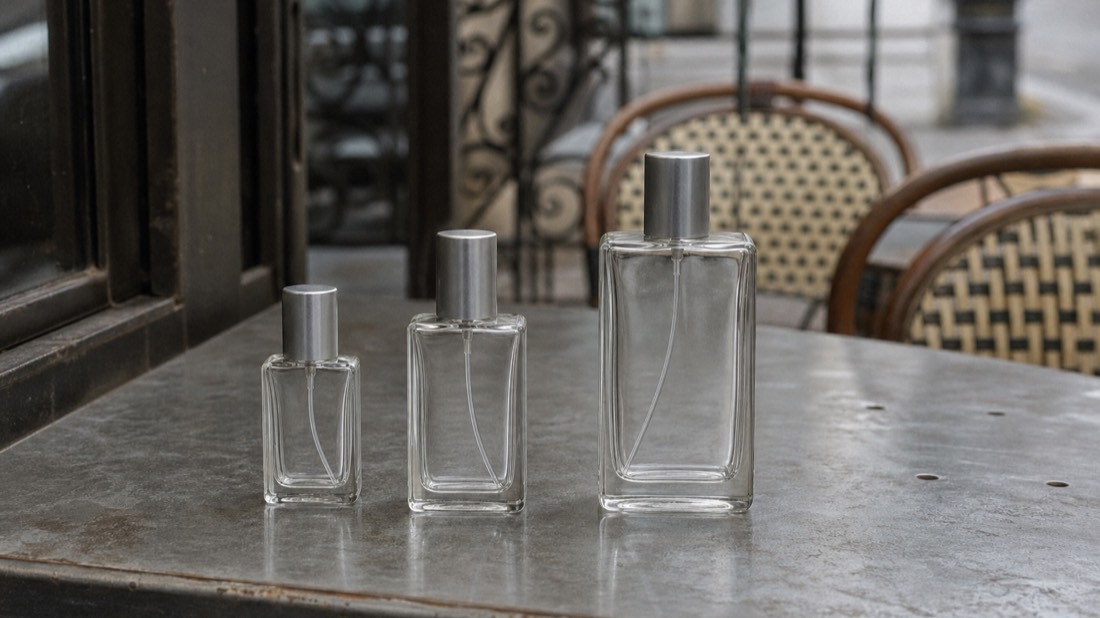
Yes on both, with two things to check. A 30 or 50 ml bottle fits EU carry-on rules, which cap each container at 100 ml inside a one-litre transparent bag, so the featured session's 50 ml travels in your hand luggage. The 100 ml bottles from Galimard and Fragonard sit exactly at the limit, so put those in checked luggage to be safe.
The tax side matters more for retail bottles than for the workshop, but it is worth knowing. France charges 20% VAT, and non-EU visitors aged 16 or over, staying under six months, can reclaim part of it on purchases over 100.01 euros in one shop on the same day. You validate the form at a PABLO kiosk on your final departure from the EU, before you check any luggage, and the deadline is the end of the third month after purchase. The net refund usually lands around 10 to 15% after the operator's fee.
For a single workshop bottle the détaxe threshold often will not be reached, so treat the tax rules as useful mainly if you also buy retail perfume on the trip. The carry-on rule is the one that affects everyone: know your bottle's size before you pack, and the trip home is simple.
Bottle
Carry-on?
Note
30 ml (Molinard)
Yes
Well under the 100 ml container limit
50 ml (featured session)
Yes
Fits the liquids bag comfortably
100 ml (Galimard, Fragonard)
At the limit
Check it to avoid any dispute at security
Retail bottles over 100.01€ in one shop
Per size rule
May qualify for a VAT refund via PABLO
Liquids and détaxe rules are from official EU and French customs guidance; refund percentages are typical, not guaranteed.
Common questions about whether a Paris perfume workshop is worth it
Is a perfume workshop in Paris worth it for a complete beginner?
Especially for a beginner. The core of the session is learning fragrance families and the top-heart-base structure, which is exactly the knowledge a beginner lacks and a collector already has. You do not need any background to compose a wearable scent with a perfumer guiding the choices.
How much does a perfume workshop in Paris cost?
Published brand-house prices run from 65 euros (Molinard, 45 minutes, 30 ml) to 95 euros (Fragonard's apprentice workshop, 100 ml eau de cologne), with Galimard at 89 euros for a 100 ml Eau de Parfum. The featured Trocadéro session shows its live price on the operator's Viator listing. Full breakdown in the cost guide.
Is a perfume workshop worth it compared to just buying perfume?
They are different purchases. Retail buys you a famous finished fragrance, and French brands are often cheaper in Paris than at home. A workshop buys you a guided composition session plus a bottle of a scent nobody else wears, and at the featured session you keep your formula, which lets you reorder it later.
Is a perfume workshop in Paris worth it for couples?
It is one of the better couple activities in the city: you each compose your own scent side by side, the session runs about 90 minutes at the featured workshop, and you both leave with a bottle that dates the trip. Groups there are capped at 8 people, so it stays personal.
Can you take your workshop perfume home in carry-on luggage?
A 30 or 50 ml workshop bottle fits EU carry-on rules, which cap each container at 100 ml inside a transparent 1 litre bag. The 100 ml bottles from Galimard and Fragonard sit exactly at the limit, so consider checked luggage for those.
Book the small-group workshop
Dates and the live price are on the operator's official Viator listing.