What Happens at a Perfume Workshop in Paris, Step by Step
A Paris workshop facilitator walks you through a perfume session start to finish: the bench, the scent families, blending, and the bottle you take home.
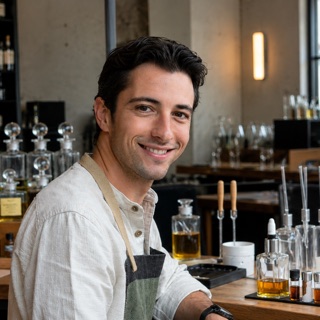 By Antoine Lefèvre, Paris perfume workshop facilitator
The first thing most people do at a perfume bench is apologize. "I have no nose." "I wear the same thing I wore in college." I have heard some version of that at nearly every session I have led since 2022, more than a thousand participants by my own count, and it is always wrong. Ninety minutes later the same person is defending their base note like a thesis. Here is the road between those two moments, step by step, so you know exactly what you are booking. Where I give specific numbers, they are the featured Trocadéro session's own: about 1 hour 30 minutes, a maximum of 8 people, a 50 ml bottle included. The rest is the shape of the craft, which I know from my own bench.
What happens when you arrive?
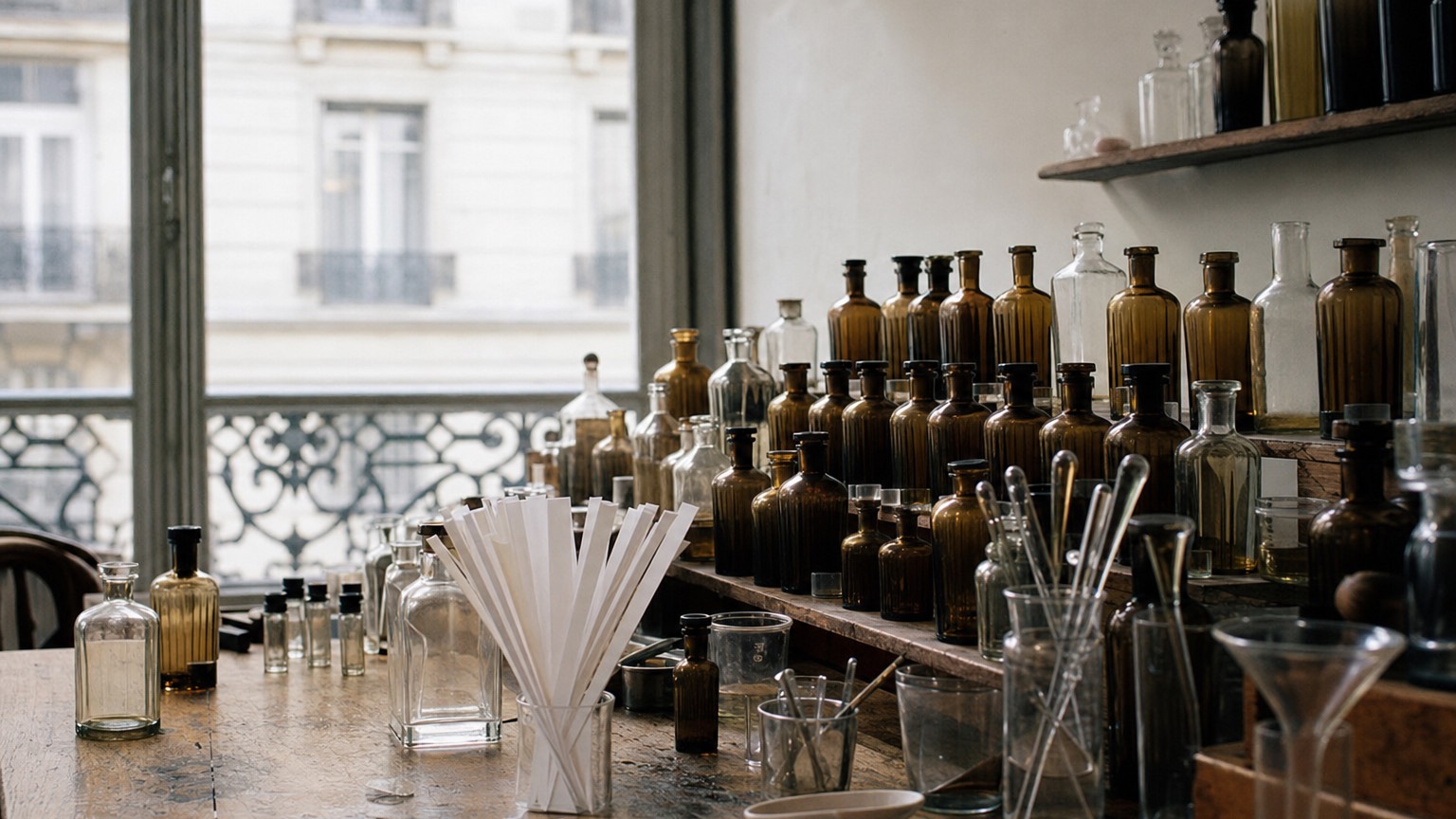
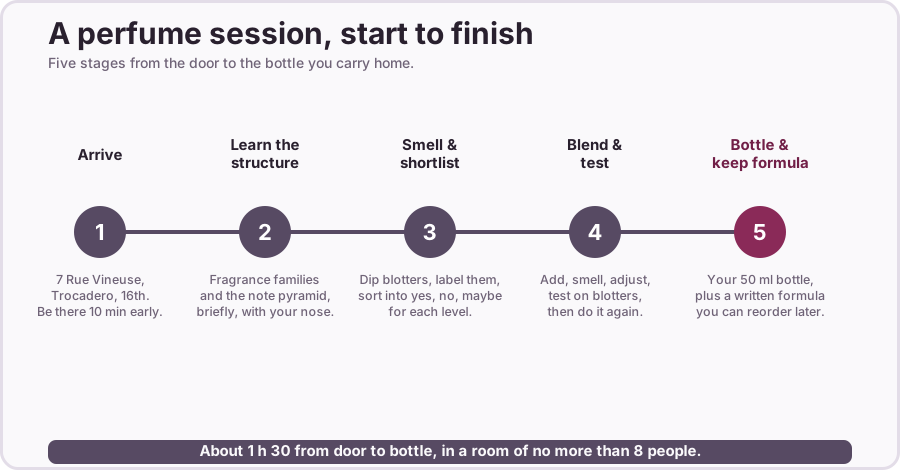
You find the atelier, you get a seat at a bench, and the bench is already set: rows of essence bottles, paper scent strips, pipettes, a beaker, and an empty bottle waiting for whatever you build. For the featured workshop that means 7 Rue Vineuse in the 16th arrondissement, a short walk from Trocadéro, and the listing asks you to be at the door about 10 minutes early.
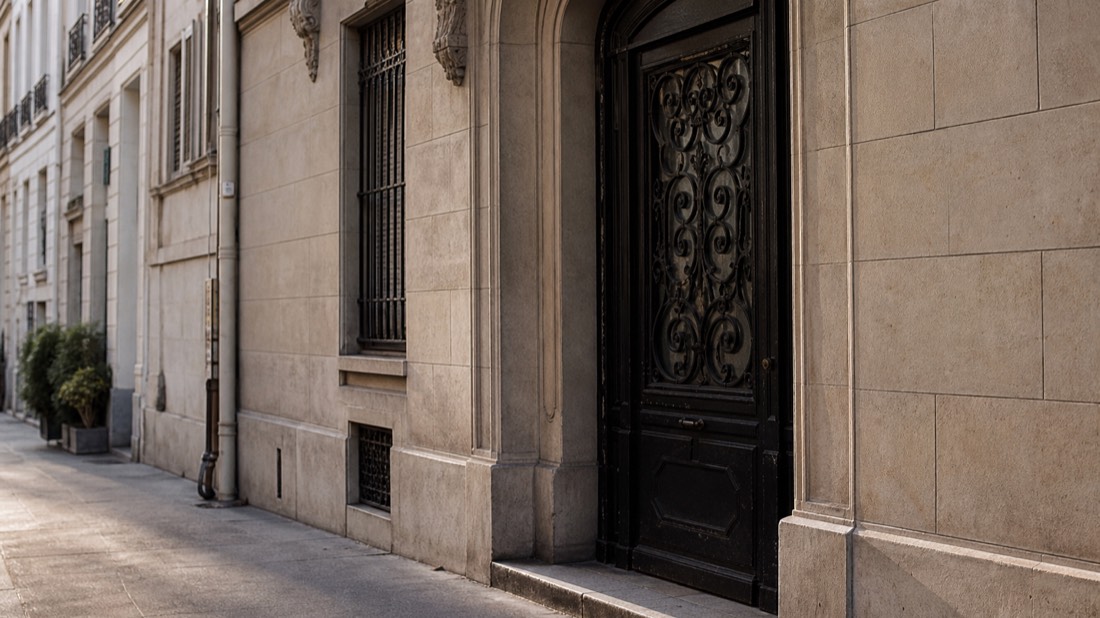
Those ten minutes matter more than they sound. Sessions this size, capped at 8 people, start on time because there is no crowd to absorb a late arrival; the perfumer greets everyone, and the introductions are short because the group is small enough for actual names. The featured session runs in English, and everything you will touch is included, materials, bottle, packaging, all of it, so you arrive with nothing but your nose.
The bench itself is the moment people reach for their phones. Dozens of small amber bottles in tiers look like an apothecary, and in a sense that is what it is. My advice: take the photo, then put the phone away. The next hour rewards attention.
How does the theory part work?
Briefly, and with your nose, not a slideshow. The perfumer sketches the two ideas everything else depends on: the fragrance families, which sort the materials into a map you can shop from, and the pyramid of top, heart and base notes, which explains why a scent changes over hours.
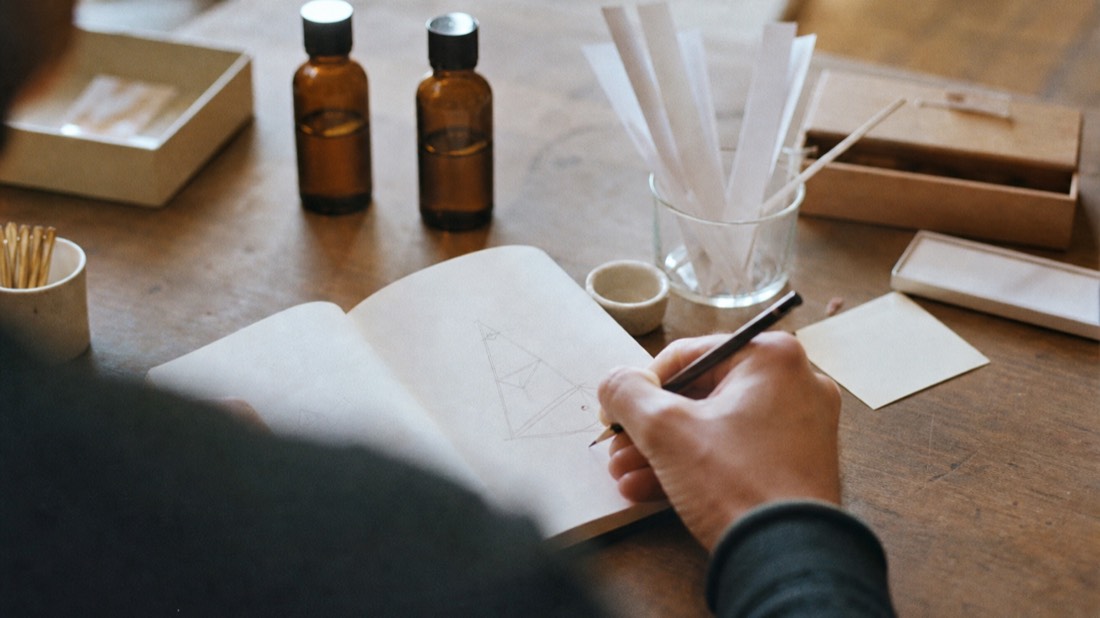
Nobody books a workshop to sit through a lecture, and no good facilitator gives one. In the sessions I lead the theory takes minutes, because each idea lands the moment a strip is under your nose. Citrus and fresh materials feel like the top of something. A deep wood explains "base note" without a diagram. The families, floral, woody, amber, fresh, and their relatives, give you a vocabulary, and the pyramid gives you a timeline: what you smell first fades first, what you smell last stays on your scarf tomorrow.
If you want a head start, the pyramid gets a full article of its own in top, heart and base notes explained. Reading it beforehand is not required. It just means you nod earlier.
How do you smell and shortlist materials?
Strip by strip. You dip or spray blotters, write the material's name on each, and sort them into yes, no and maybe piles. The goal is a shortlist for each level of the pyramid, not a ranking of everything on the bench.
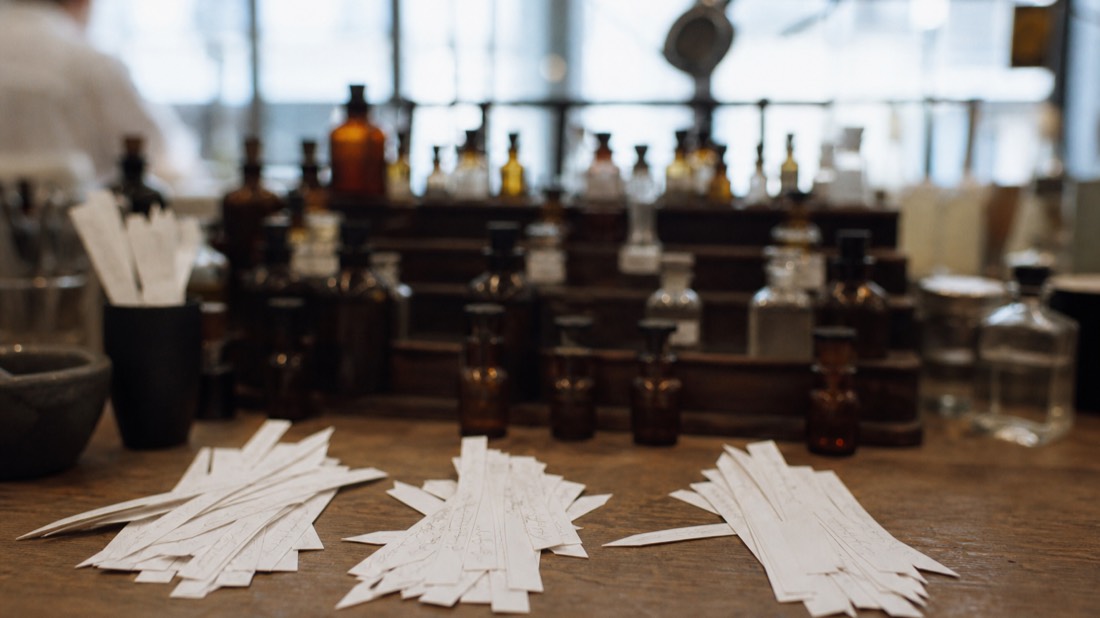
This is the longest stretch of any session and the most fun to watch. Two things happen to almost everyone. First, a material you expected to love smells wrong on the strip, and one you would never have picked wins you over on the second pass. Second, your nose gets tired. It happens to every group; the fix is old and slightly funny, you smell your own sleeve, or coffee beans where the atelier keeps them, and the palate resets.
The mistake I flag most often: shortlisting only the loud, sparkly openers. Base materials are slow. Give a wood or an amber strip a minute before you judge it, because the material that seems dull at second one is often the one holding your perfume up at hour six.
What does the blending stage look like?
You choose a direction with the perfumer, then build the blend in small measured steps, testing on a strip as you go. It is iterative by design: add, smell, adjust, smell again. Nobody pours a perfume in one confident go, including perfumers.
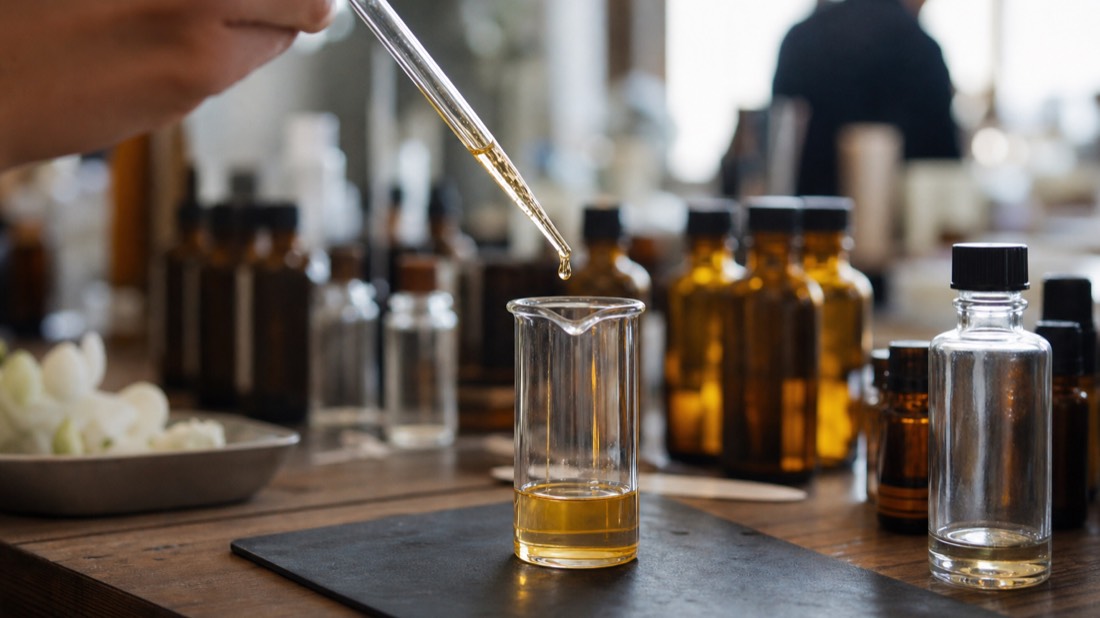
Here the small group earns its keep. With 8 people at most, the perfumer gets around the bench continually, and this is where you want the professional eye, because the classic beginner errors all happen at this stage: too many materials at once, fixing the opening when the problem is the base, doubling a dose when a drop would do. A guided session catches those in the moment. The featured workshop's listing names its perfumer, Marina Jung; I do not teach that session, but the structure it describes is exactly the structure that works.
Expect a stretch where your blend disappoints you. That is normal, and it is usually one adjustment from good. The strips you kept from the shortlisting stage are your tools now: smell the blend, smell the candidates, decide what is missing.
What happens at bottling?
Your finished blend goes into your bottle, the bottle goes into its packaging, and, the part people underrate, your formula is written down and goes home with you, and keeping it means the scent can be reordered later. At the featured session the bottle is 50 ml and everything, packaging included, is in the price.
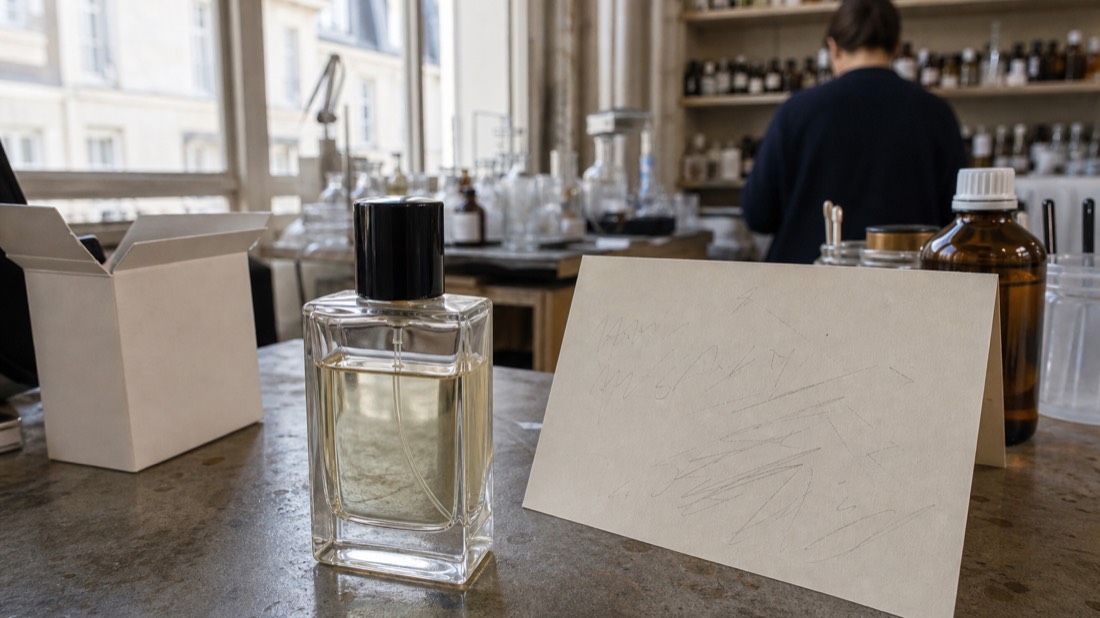
Fifty milliliters is a real bottle, the size you would buy at a counter, not a souvenir vial. But that written formula is the feature I tell people to care about. Without it, the workshop ends when the bottle empties. With it, you have a scent with your name on the recipe that you can order again from home, which quietly turns a holiday activity into a perfume you might wear for years. Practical note for the flight: 50 ml sits comfortably inside the EU's 100 ml carry-on limit; the details live in our FAQ.
How should you prepare, and what surprises first-timers?
Come with a rested nose. My standing advice: skip strong coffee just before the session, skip wearing fragrance that morning, and do not smoke on the walk over. Beyond that, bring nothing. The surprise, almost universally, is how personal the result feels.
The preparation advice is mine, from watching benches since 2022, and it is not superstition. A nose that has spent the morning inside an espresso or under a cloud of yesterday's eau de parfum starts the session half blind, and the first twenty minutes are the smelling-est part of the day. Water is your friend. So is arriving unrushed, which the ten-minute-early rule handles for you.
What surprises people is not the craft, it is the attachment. A thing you made in ninety minutes, that smells like the choices you defended at the bench, lands differently than anything you could buy. That is the honest pitch for doing this in Paris at all. If you are deciding where, the featured small-group session near Trocadéro holds 4.7 across 293 Viator reviews with 94% of travelers recommending it; the specifics are on the workshop page, and the field-wide comparison is in the guide to the best perfume workshop in Paris.