What Is a Perfume Organ? The Bench Furniture That Runs a Workshop
A Paris workshop facilitator explains the perfume organ: the tiered rack of raw materials, why it is shaped that way, and how a bench is arranged.
 By Antoine Lefèvre, Paris perfume workshop facilitator
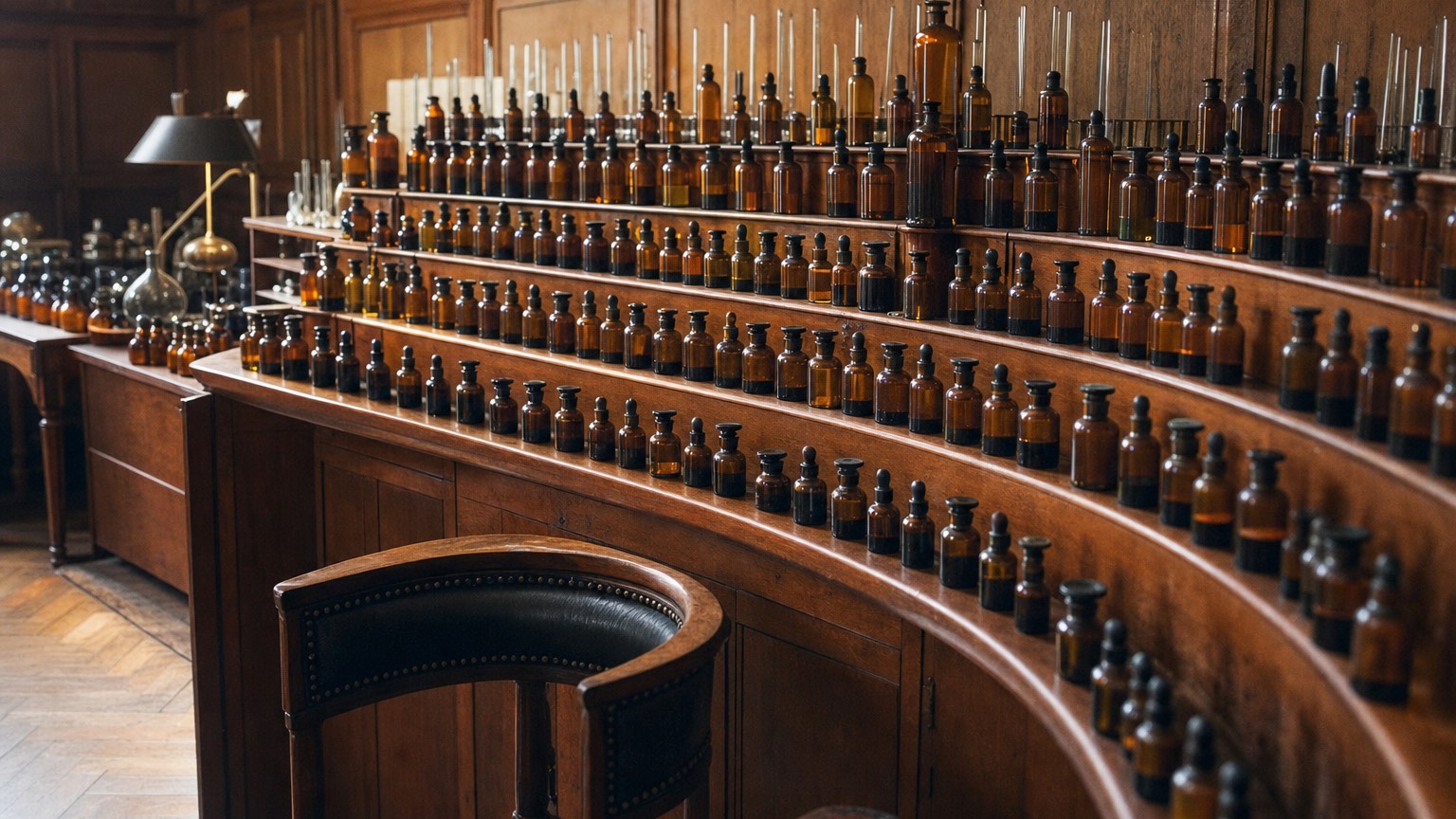
Every session, someone points at the rack of bottles and asks what it is called. It is the most photographed object in any atelier I have worked in since 2022, and almost nobody arrives knowing its name. The answer usually gets a smile: it is an organ. Not a metaphor perfumers invented to sound poetic, or not only that. It is the actual working name for the piece of furniture the whole craft sits in, and once you understand how one is built, you understand a surprising amount about how perfume itself is made.
What is a perfume organ?
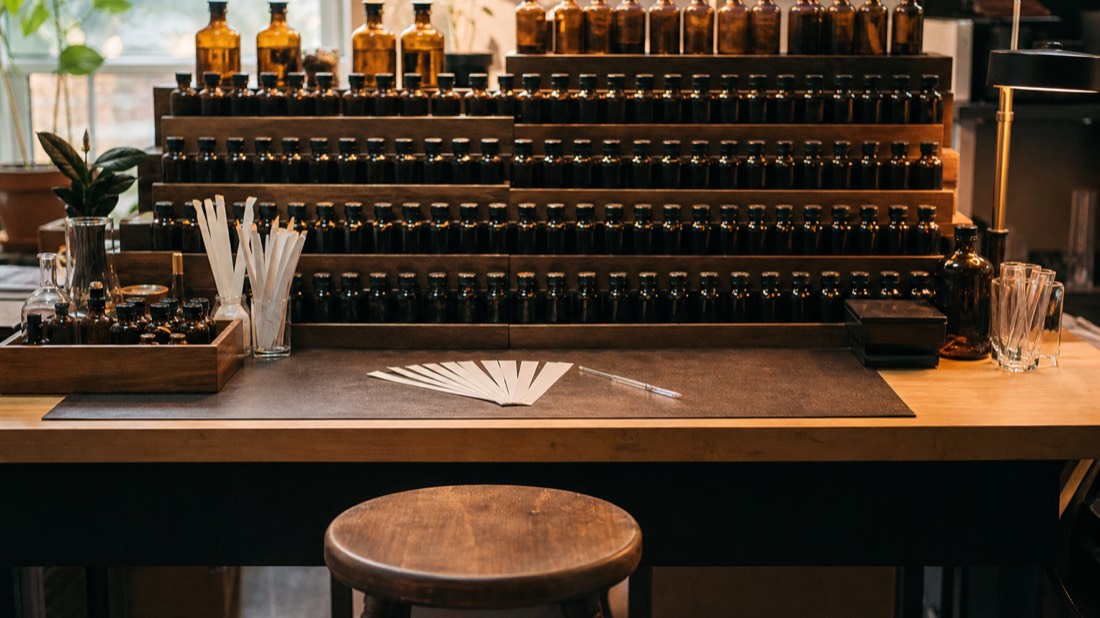
A perfume organ, orgue à parfums in French, is the tiered, semicircular rack that holds a perfumer's raw materials, each essence in its own small bottle, arranged in rising rows that curve around the seat. It takes its name from its resemblance to the ranked pipes of a church organ.
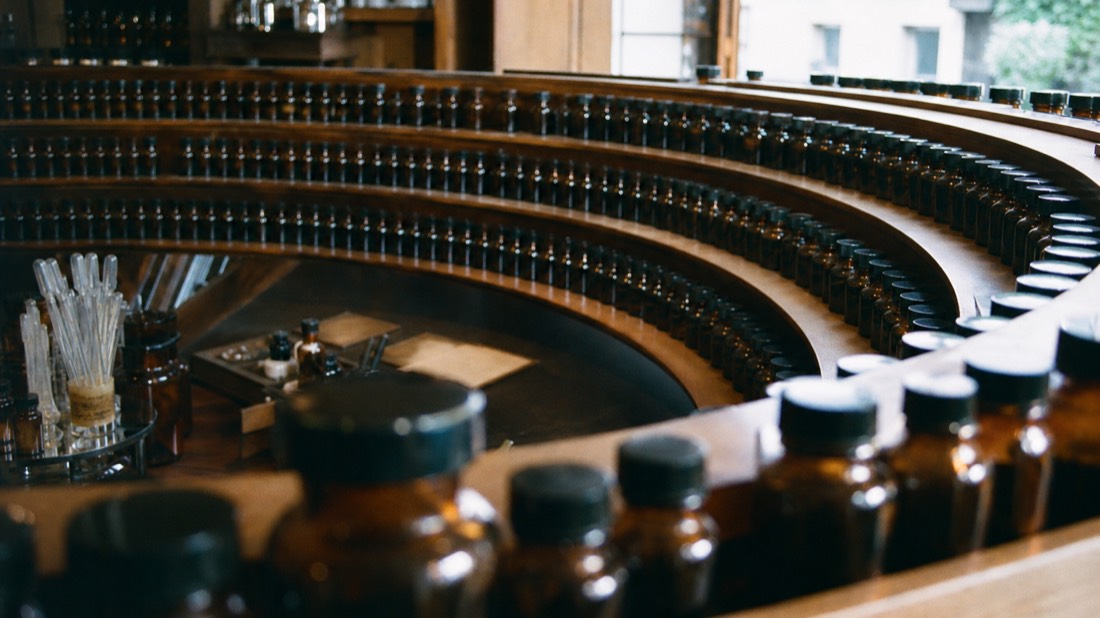
The comparison is more than visual. A pipe organ puts an orchestra's worth of voices under one player's hands; a perfume organ does the same with scent. Sit at the center and every material you might call on is in front of you, row above row, the way an organist faces ranks of pipes. Perfumers even borrow the musical vocabulary that comes with it: notes, accords, composition. The furniture and the language grew up together, and both tell you the same thing, that a perfume is played from a keyboard of materials rather than poured from a single bottle.
I will spare you invented history here, because the honest version is short: the name describes the shape, the shape serves the work, and the work is what this post is really about.
Why the tiered, semicircular shape?
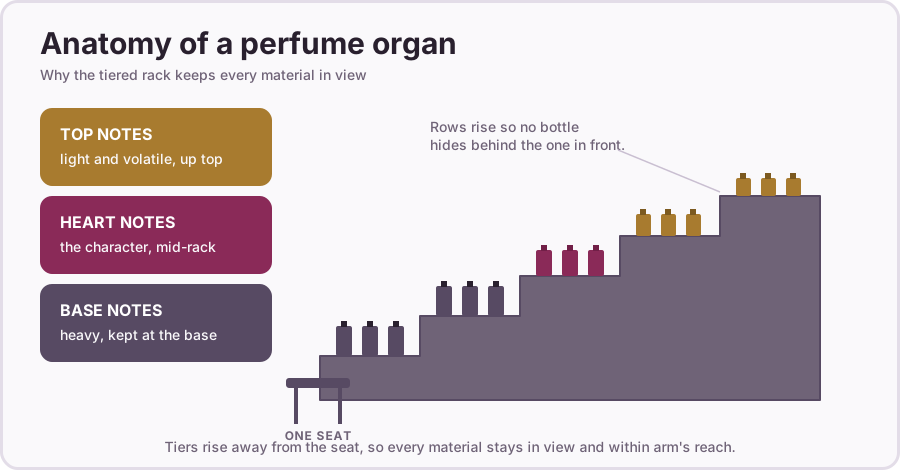
Because blending is done seated, with your eyes and hands busy. The tiers rise so that no bottle hides behind another, and the curve wraps the rows around you so that everything stays within one arm's reach. You never stand up, never turn your back on a blend in progress, never hunt for a material mid-thought.
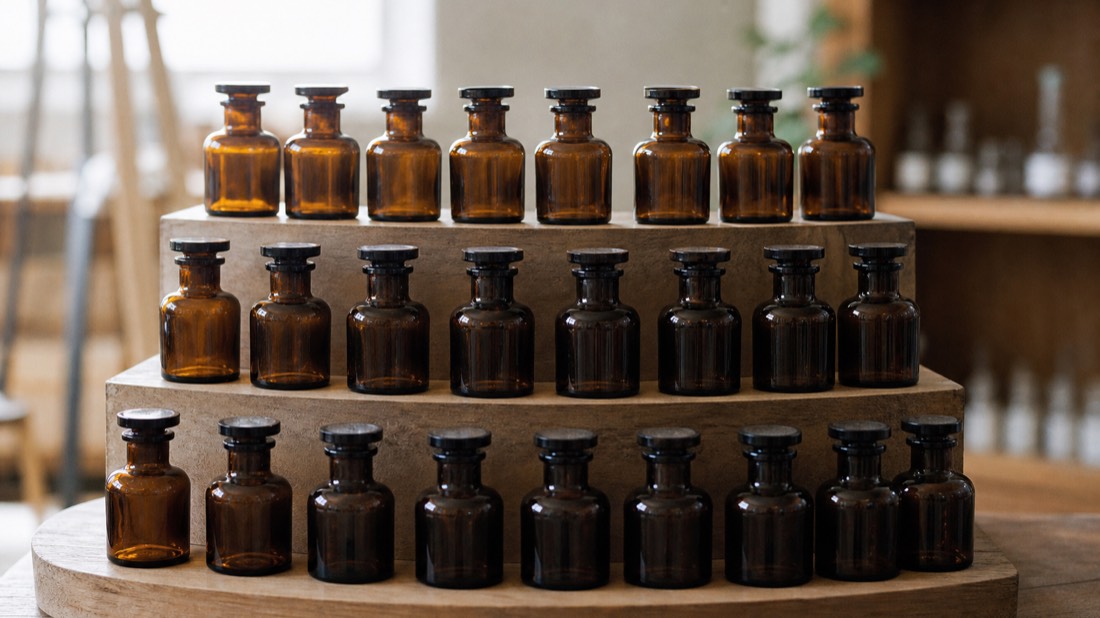
Watch someone work at a flat shelf of bottles and the problem becomes obvious in a minute. They lean, they shuffle bottles, they lose the one they just used. A blend in progress is a moving target; materials are evaporating on the strip while you decide, and the decision is easier when the next candidate is a hand-lift away rather than a search. The organ is ergonomics dressed up as theater. Beautiful, yes, and every workshop guest photographs it, but each design choice earns its keep at the bench.
There is a quieter benefit too. Because every bottle is visible at once, the organ works as a map of the palette. You see the whole range before you choose, the way a painter sees the full paintbox, and that changes how people compose. Choices become deliberate instead of sequential.
How are the materials actually arranged?
By family and by behavior. The common practice, and the one I use on my own bench, is to group materials by fragrance family, citrus and fresh notes together, florals together, woods and ambers together, and then to let volatility set the vertical logic, so the fleeting materials and the lasting ones each have their territory.
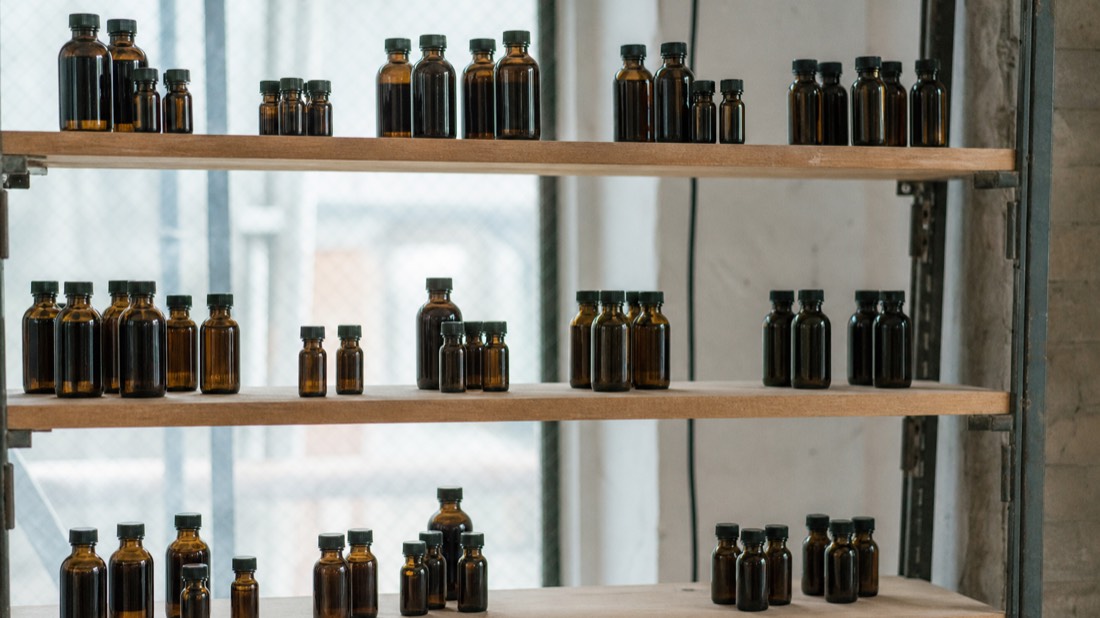
I should be clear that this is craft habit, not a standard anyone enforces. Every perfumer I have compared benches with arranges theirs a little differently, and the arrangement is personal in the way a cook's kitchen is personal. Some sort strictly by family. Some sort by top, heart and base, so the organ physically mirrors the pyramid they build blends with. Most, in my experience, run a hybrid and could find any bottle blindfolded, because the arrangement lives in the hands after enough years.
For a workshop, the arrangement is also teaching. When the citrus row sits apart from the woods row, the families stop being abstract vocabulary and become geography. I watch people learn the map without noticing: by the second pass through the bench they reach for regions, not random bottles. That is the organ doing half my job.
What does sitting at one feel like the first time?
Like being handed the controls of something. Most people go quiet for a moment. There is a wall of bottles that all look alike, a strip in your hand, and the realization that nothing here is labeled with an answer, which is followed by the better realization that the rows themselves are the guide.
The overwhelm passes fast, and I have learned not to rescue people from it too quickly. The first few minutes of confusion are where the attention comes from. Then the structure clicks: this row is bright, this row is soft, this row is deep, and suddenly the same person who apologized for having "no nose" is working the tiers with real intent. I have watched that turn happen more than a thousand times by my own count, and it has not gotten old yet.
What surprises people most is how physical the work is. Lift, uncap, dip, wave the strip, set it down, reach for the next. The organ turns smelling from a passive act into a manual one, and hands remember what noses alone do not.
How is a workshop organ different from a perfumer's working organ?
Scale and curation. A professional's working organ holds a far larger palette, built over years around that perfumer's own style, including difficult materials that need experience to handle. A workshop organ is deliberately smaller: a curated selection chosen to be forgiving, legible for beginners, and hard to combine into something unwearable.
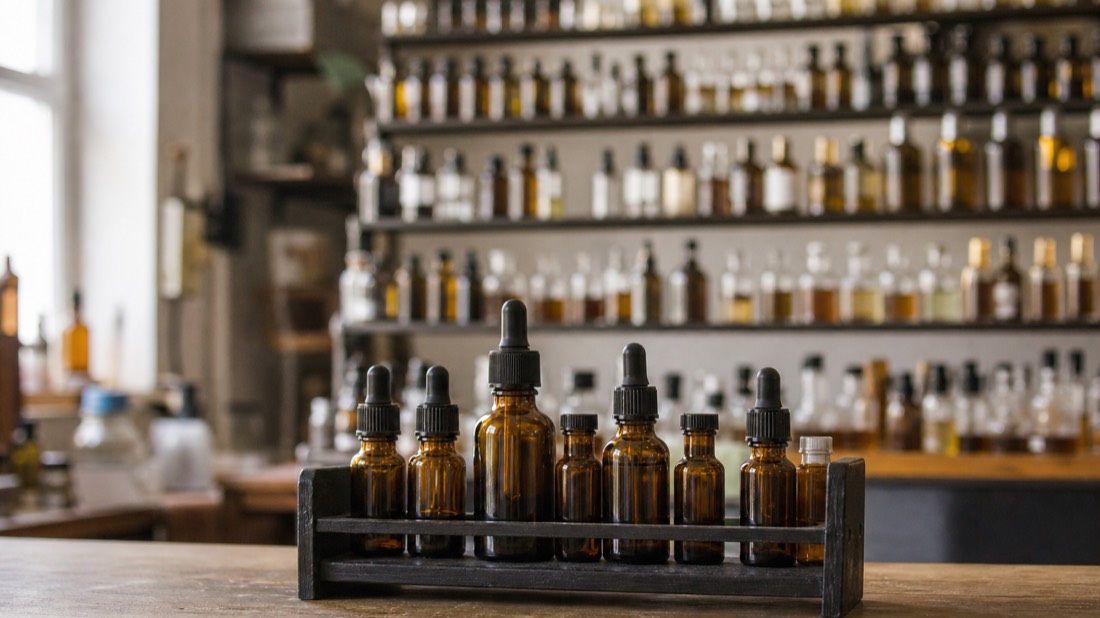
This is a feature, not a downgrade. Hand a first-timer a full professional palette and you get paralysis, or a blend at war with itself. Hand them a curated organ and every path through it leads somewhere decent, which is what you want from ninety minutes. The skill of building a workshop bench is mostly the skill of removing things.
If you want to see how a session actually moves through that bench, stage by stage, I have written the full walkthrough of what happens at a Paris workshop. And if you would rather just sit at an organ yourself, the session this site covers in depth is the small-group workshop near Trocadéro: about 1 hour 30 minutes, a maximum of 8 people, all materials and a 50 ml bottle of your own formula included, with the formula yours to keep so you can reorder. I do not teach it, its listing names the perfumer Marina Jung, but the bench is the real thing. Details are on the workshop page.
The organ is the rare piece of specialist furniture that explains its own craft. Ranks of materials, one seat, everything within reach: perfume is composed, and the bench was built to say so.